
THEY CAN KILL YOUR GAME.
YOU STILL PAID FOR IT.
And gamers need to understand what that means before we sleepwalk into it.
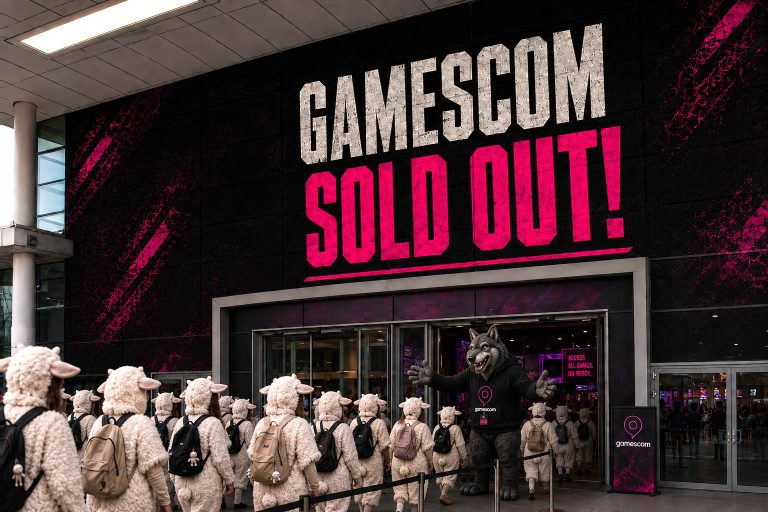
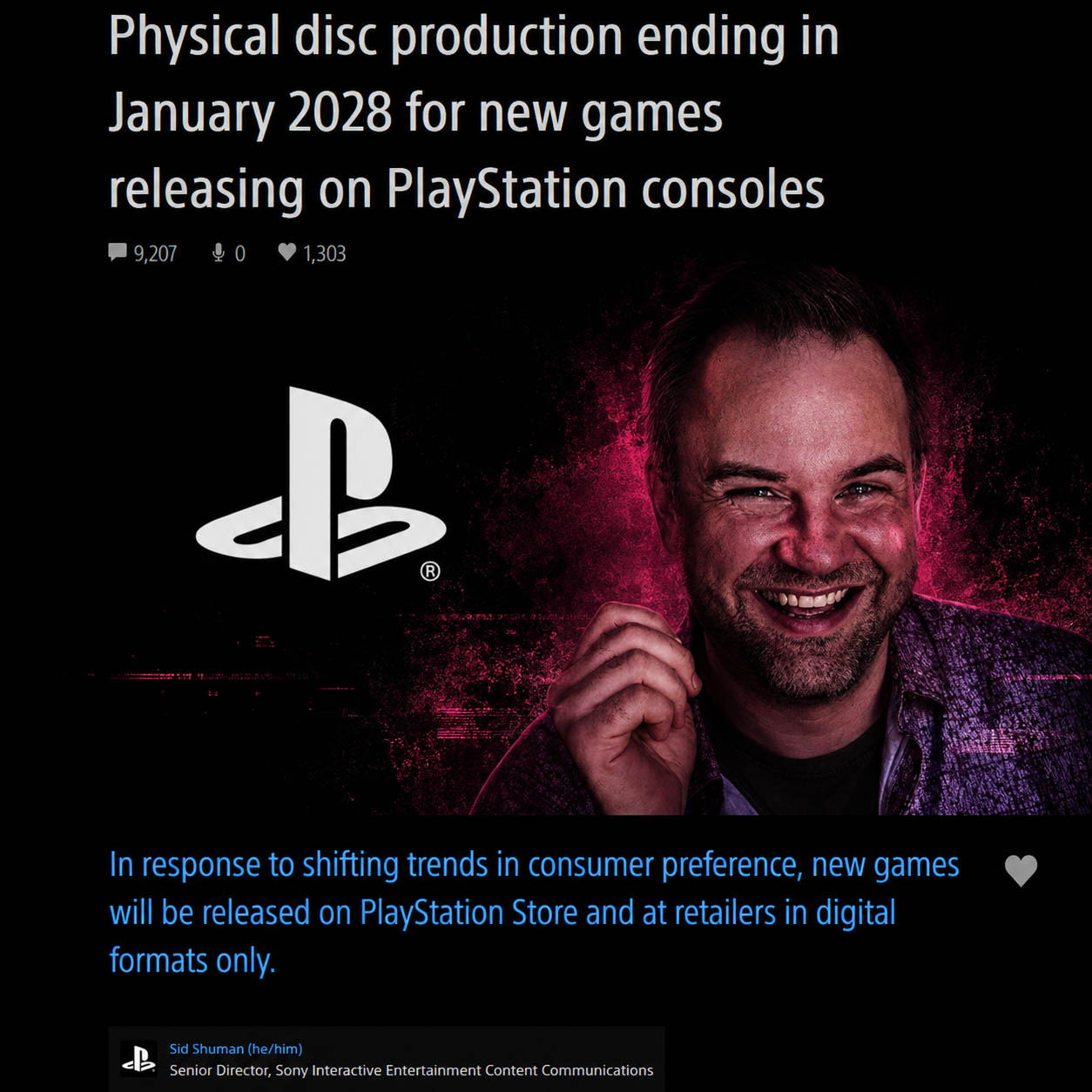
Sony announced that beginning in January 2028, new games releasing on PlayStation consoles will no longer be manufactured on physical discs. Retailers will still sell new games, but those purchases will be digital. Sony calls this the “natural direction” of the market as consumer preferences shift toward digital.
Maybe digital is where the market is going.
Because physical media gave players something the digital ecosystem has steadily taken away: a copy of the game that exists outside the publisher’s control.
You could put a disc on a shelf and come back to it years later. You could sell it, trade it, lend it, buy one second-hand. The publisher could stop caring about the game tomorrow and your copy would still be sitting there.
The digital future changes that equation.
A publisher can sell you a game that requires its servers to function. The publisher takes your money, and years later decides the game is no longer profitable enough to support. The servers go offline. The company removes the game from its store. It can revoke licenses or introduce technical measures that prevent the existing copy from functioning.
The money is gone. The game is gone. The publisher moves on.
You don’t.
This Is Already Happening
You don’t need to imagine some dystopian future to understand the problem.
Look at The Crew.
Ubisoft released the racing game in 2014. People bought it. They bought physical copies. They bought digital copies. They played it for years.
Then Ubisoft announced the shutdown.
On March 31, 2024, the servers went offline and The Crew became unplayable. Ubisoft subsequently began revoking licenses, preventing players from downloading or reinstalling the game they had purchased.
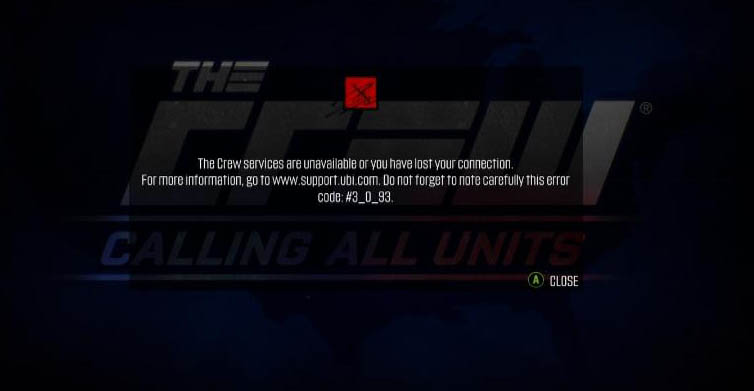
Ubisoft did offer refunds to some customers who had purchased the game “recently.” But the game was already nearly a decade old. The lawsuit filed against Ubisoft points out exactly why that left many owners out in the cold: people who bought the game years earlier generally did not qualify for those refunds. The plaintiffs themselves purchased their copies in 2018 and 2020.
Think about the absurdity of that arrangement.
Because enough time has passed, the normal refund window is already gone.
The publisher controls the lifespan of the product while the consumer carries the financial risk.
And Ubisoft didn’t just shut down the servers. It also revoked the licenses, making sure players couldn’t simply keep their copies or reinstall the game later.
That’s the part gamers need to understand.
This isn’t just about servers becoming expensive.
The Graveyard Is Already Filling Up
The Crew is not some unique Ubisoft disaster.
Battleborn launched in 2016. Its servers were shut down in 2021. The entire game became unplayable, including its single-player campaign.
You could own the game, you could have bought it physically, and you could have played it for years. It didn’t matter. When the service disappeared, so did the game.
Then there is LittleBigPlanet 3.
Sony shut down its PS4 servers indefinitely in 2024. The offline campaign and locally stored content remained playable, but the online ecosystem that made LittleBigPlanet special disappeared. Players lost access to other people’s creations and the ability to share or download content from that enormous community.
And that’s where this stops being merely a consumer complaint.
A game can be a piece of art. A community can build on it. Players can create things the original developers never imagined. A game can become part of somebody’s childhood and part of a generation’s shared memory.
When access disappears, that culture can disappear with it.
We are already creating a gaming history filled with holes because companies decided that maintaining yesterday’s games wasn’t worth the money.
And the industry expects us to shrug.
The Industry Loves This Model
There is another part of this conversation that shouldn’t be ignored.
Physical games created a secondary market that publishers could not completely control. You could buy a new game, wait six months and buy it used for half the price. You could trade your copy toward another game. You could sell a game you finished and recover some of the money.
That market put pressure on the price of games.
The digital model removes much of that player-to-player competition. A digital purchase is tied to your account and generally cannot simply be transferred to another player and sold.
And now Sony is moving toward a PlayStation where new games won’t even have a physical disc version.
The industry’s response will be that digital is cheaper and more convenient.
Maybe for them.
The publisher and platform sit between the game and the consumer. They control the storefront, the license, the price and the distribution. And in server-dependent games, they can control the lifespan.
That’s an extraordinary amount of power to hand to companies whose primary responsibility is to their shareholders.
We should not pretend this is being done for the benefit of the player.
And Sometimes Your Library Doesn’t Even Follow You
The digital dream also comes with another unpleasant reality: your purchases don’t necessarily follow you into the future.
Nintendo is the clearest example.
Nintendo’s own support documentation explicitly states that Wii U and Nintendo 3DS games purchased through the eShop do not carry over to Nintendo Switch.
The games you bought digitally remain associated with the old ecosystem. The new console is a new ecosystem. And if you want that game on the new platform, you may have to buy it again.
That’s the part that should make every digital customer uncomfortable.
If I buy a physical copy, I know what I have.
If I buy a digital license, I’m trusting a company to maintain a chain of compatibility, account access and platform support indefinitely. And that company can change the rules.
Sometimes companies choose to preserve them. Sometimes they don’t. And the consumer has very little say in the matter.
Games Should Have Been Designed For Their Own Survival
This is why the industry’s usual response, “servers cost money”, misses the point.
Nobody is demanding that publishers run expensive servers forever.
If a game needs online infrastructure for competitive multiplayer, fine. But the game should be designed so that the publisher’s departure does not automatically mean the player’s game dies.
ARK: Survival Evolved demonstrates the basic idea. It has an offline single-player mode and supports player-hosted/dedicated-server configurations rather than making every part of the experience dependent on one permanent official service.
That’s how games should be built.
Let the official servers provide the premium online experience while the publisher is supporting the game. But when the company decides it is finished, give the players a way forward: offline mode, private servers, dedicated-server software, a final patch, whatever is technically appropriate for that game.
The game shouldn’t have to die with it.
Tell Us How Long We’re Buying It For
If the industry insists that games are licenses rather than permanent purchases, then…
If a game requires an internet connection, tell the customer before they buy it. If the publisher can shut down the servers, tell them. If the game becomes completely unplayable when that happens, tell them. If the purchase won’t carry to the next generation, tell them. If there is no offline mode and no preservation mechanism, tell them. Don’t bury it in scammy fine print. Put it where the customer can see it.
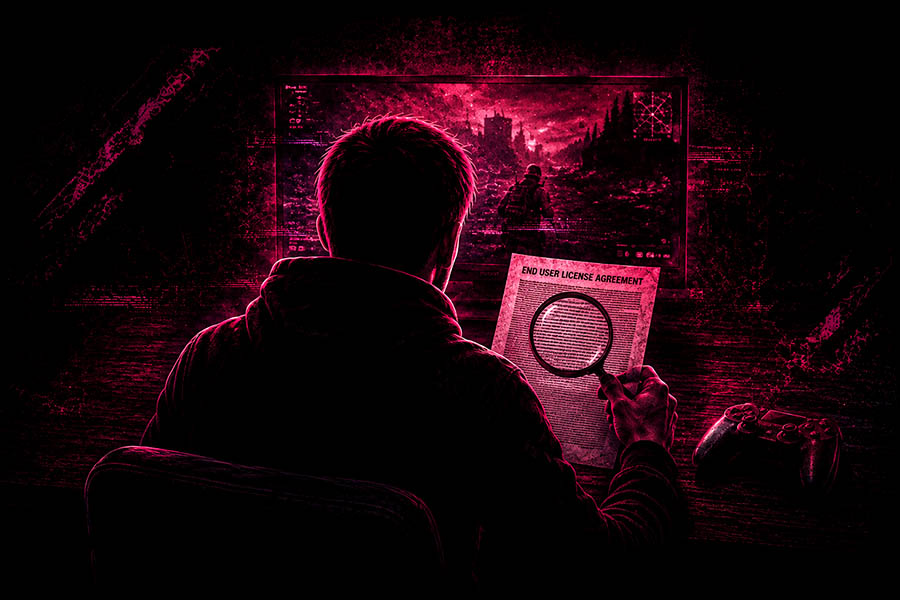
That’s information that directly affects the value of the purchase.
A €70 game that could remain playable for thirty years is not the same product as a €70 game that could become worthless when a publisher shuts down its servers.
The customer deserves to know the difference before handing over the money.
The industry cannot have it both ways. It cannot charge us as though we are buying a finished product and then hide behind licensing language when it decides the product’s life is over.
This Is Why Ross Scott Matters
This is why Ross Scott, the founder of the Stop Killing Games movement, deserves serious credit.
Scott took an issue the industry was perfectly happy to leave in the shadows and dragged it into public view.
Stop Killing Games grew directly out of the fight over games like The Crew and argues for consumer protections that would prevent publishers from deliberately destroying the functionality of games they have sold. The movement’s European Citizens’ Initiative passed the one-million-signature threshold, with more than 1.29 million verified signatures reported, forcing the initiative into the next stage of the EU process.
It shouldn’t be the job of one YouTuber and a group of preservationists to beg an industry worth billions to stop destroying our games.
Go check out Stop Killing Games and support the fight to stop publishers from destroying games we already paid for.
Every gamer who has bought a game has a stake in this.
Because once the industry establishes that a publisher can sell you a game, take your money and later destroy your ability to use it, the question isn’t whether your favorite game will be next.
We Don’t Accept The Deal
The industry has spent years moving the goalposts.
And every step was sold as inevitable progress.
We don’t accept that “digital” has to mean “revocable.”
We don’t accept that a €70 purchase should come with an undisclosed expiration date.
We don’t accept that a publisher should be able to erase a game from existence while keeping the money.
We don’t accept that an entire generation of player-created culture can disappear because maintaining a server isn’t profitable anymore.
And we certainly don’t accept that the answer is for gamers to simply read the fine print and shut up.
If the industry wants a digital future, then we are going to demand a digital future that serves the people actually playing the games.
Games must be preservable. Purchases must be transparent. Libraries should be portable. Players should have meaningful control over what they bought. And when a publisher abandons a game, the publisher should not automatically get to take the game with it.
Because this isn’t about nostalgia.
It isn’t about people who hate digital downloads.
It isn’t about refusing to accept technological change.
The industry wants the power to determine what we buy, what we pay, where we access it, how long we can access it and whether it survives.
And if the industry refuses to give it back willingly, then players need to fight for it.
Support Stop Killing Games. Support preservation. Support legislation that protects consumers. Demand offline functionality. Demand server shutdown plans. Demand transparency. And stop giving your money to companies that have already shown they can’t be trusted with it.
And most importantly, stop treating the industry’s rules as laws of nature.
They aren’t.
They are rules the industry created.
Games are our culture. They are the worlds we explored, the communities we built and the memories we carried with us long after the publishers moved on to their next quarterly target.
We are not going to stand by while corporations erase pieces of that culture because they no longer fit the business plan.
We’re not leaving.
TO THE PLAYERS.
About the Author