
They Didn’t Depoliticize Gaming. They Captured It.
That is the part the gaming establishment desperately wants you to forget.
They didn’t arrive in gaming asking whether politics belonged here. They spent years making sure it did. They brought their politics into studios, publishers, conferences, hiring departments, marketing campaigns, esports, community management and the games themselves. They transformed corporate ideology into gaming culture and then gave that ideology institutional authority.
And now they want to pretend the problem is our politics.
That trick isn’t going to work anymore.
GamerGate was the warning shot. What began in 2014 as a revolt against a gaming press increasingly determined to tell players what they were supposed to think became the first major battle over who actually owned gaming’s culture.
They didn’t listen.
They doubled down.
And now, more than a decade later, the same fight has moved from gaming journalism into the institutions themselves.
The difference is that this time, they aren’t merely telling us what to think.
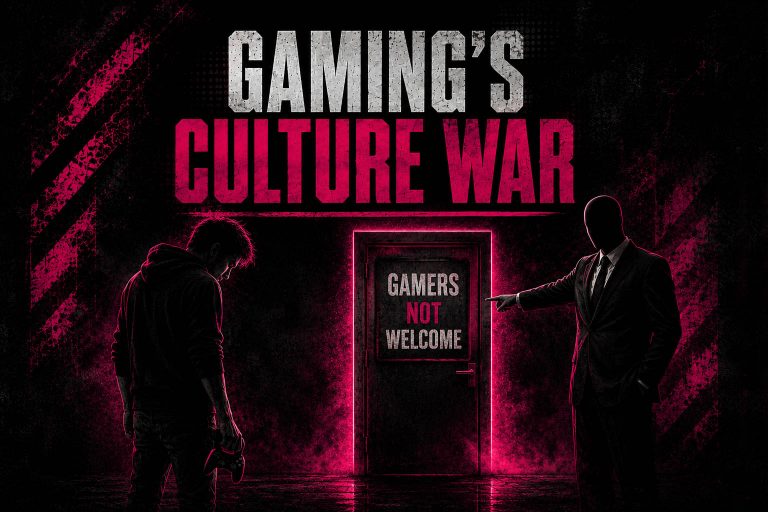
Because when the institutions they now control start deciding which gamers, opinions and political affiliations are welcome inside gaming spaces, we are no longer talking about some abstract argument over whether games are political.
We’re talking about who controls gaming.
And they have made their answer perfectly clear.
They think they do.
The Culture They Invaded
Gaming did not begin as an ideological project.
It was a subculture. It was built by players who wanted to play games. The people who created its communities were not waiting for corporations to tell them what values their hobby was supposed to represent. They built LAN parties, forums, clans, tournaments and communities because they loved the medium.
It was messy. It was juvenile. It was competitive. It was occasionally obnoxious. It was full of people who would never have survived a corporate culture workshop.
That was gaming.
As gaming became too valuable to remain merely a subculture, its institutions grew larger, more professionalized and increasingly corporate. And with that came something else: an attempt to redefine the culture itself.
The old gamer became a problem to be corrected.
The new corporate gamer became the model to be promoted.
And the language changed with it. The industry developed its own ideological vocabulary, its own approved values and, eventually, its own definition of what gaming was supposed to be.
An industry increasingly captured by one ideological worldview began imposing that worldview on the culture itself, and then demanded that everyone else accept it as the new normal.
It wasn’t the natural evolution of gaming.
And the people who took over eventually discovered something very useful: if you control the institutions, you don’t have to win the cultural argument.
They Even Came for the Halo Composer
Marty O’Donnell isn’t some political activist who wandered into gaming yesterday. He composed the music for Halo, helping create the sound of one of gaming’s most iconic franchises.
Now he’s running for Congress as a Republican, and a Halo LAN tournament he planned to host in Las Vegas was canceled by the venue, which said the decision was based on the event’s “political affiliations and election-related nature.”
The people who spent years dragging politics into gaming now want to draw a political boundary around gaming, and they intend to decide which side of that boundary you’re allowed to stand on.
Marty O’Donnell helped build gaming culture.
That is gatekeeping.
They’ve Done This Before
This isn’t new.
In 2019, Blizzard showed exactly what happens when a gaming corporation decides it has the authority to police politics inside its own gaming ecosystem. Hearthstone player Chung “Blitzchung” Ng Wai made a political statement supporting the Hong Kong protests during the post-match broadcast after winning his match. Blizzard suspended him, stripped his prize money and kicked him out of the competition.
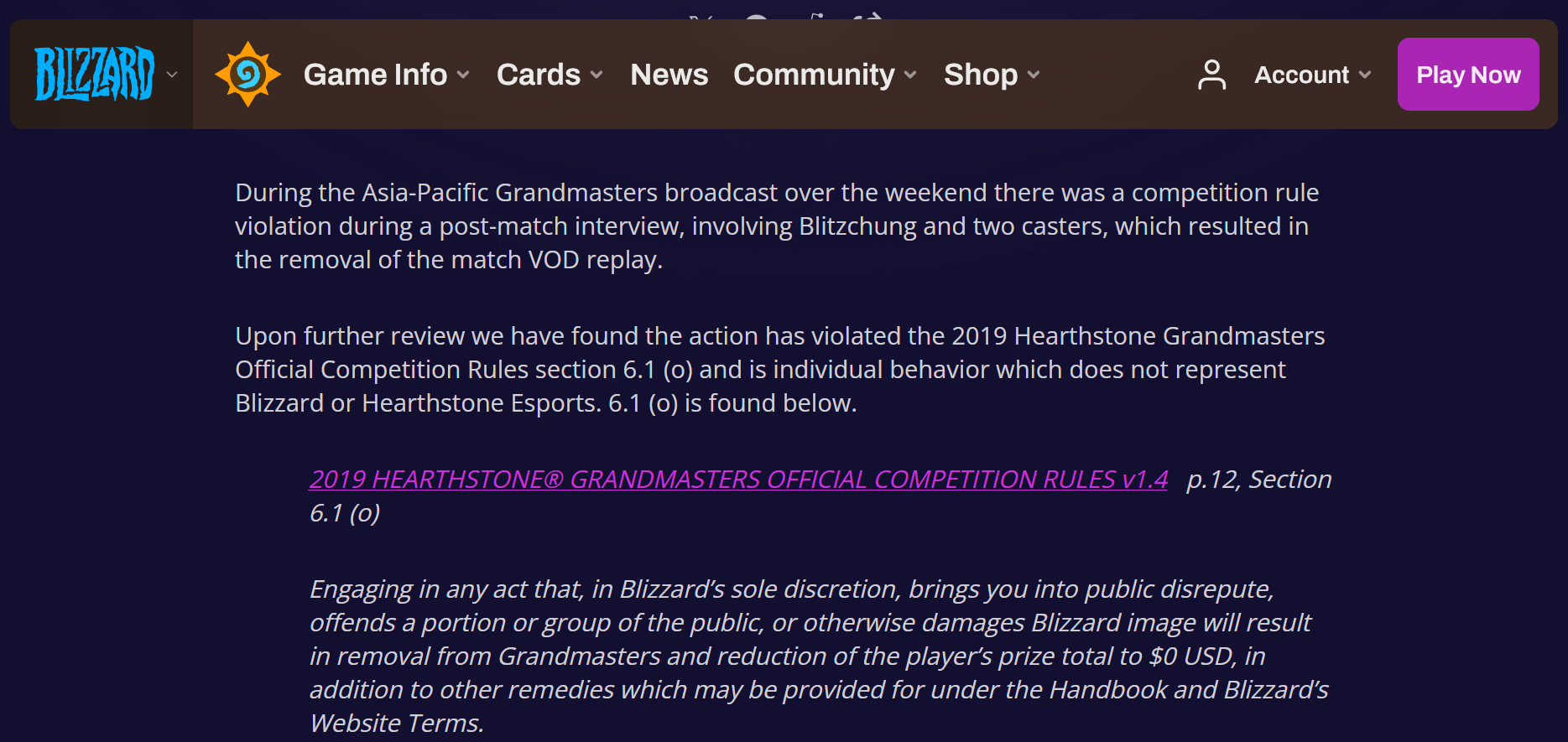
That is the power they built.
And once corporations decided they were no longer merely selling games but were the administrators, arbiters and moral authorities of gaming culture, they could turn their institutional power into a weapon.
The Double Standard Is the Point
This is where the industry’s ideological transformation becomes impossible to separate from the gatekeeping now taking place.
The same new gaming ideology that can celebrate the killing of a conservative political figure like Kirk while treating the alleged theft of a bag of breast milk as evidence of the moral depravity of the old gaming culture demonstrates the extraordinary asymmetry we’re dealing with.
And then we’re supposed to believe that the problem is the old gamers bringing politics into gaming?
They were brought here by the institutions that now claim the authority to police them.
They Didn’t Win the Culture War. They Captured the Battlefield.
That distinction matters.
If these institutions had actually convinced gamers that their vision of gaming was better, they wouldn’t need to police dissent so aggressively.
They wouldn’t need corporate values statements telling employees what the culture should be.
They wouldn’t need platforms and venues to determine which political identities are compatible with participation.
They have institutional power because they acquired the machinery of gaming.
And that is very different from owning the culture.
The mistake was assuming that institutional control would eventually become cultural adaptation.
Gamers of the World, Unite
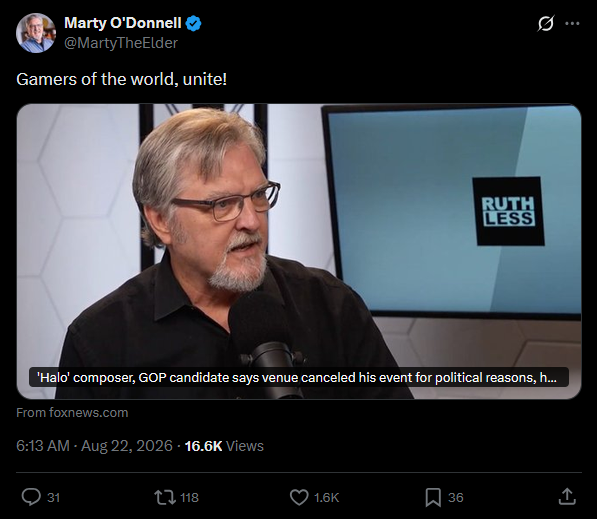
Marty O’Donnell said it.
Then let’s unite.
They thought they survived GamerGate. They didn’t. It was just the beginning.
We are still here.
They have spent twelve years pushing gamers to the edge.
Now they should be very careful what happens when gamers stop backing down.
FOR PERMISSION.
About the Author