

THE GAME USED TO COME FIRST
One philosophy starts with the experience and asks how much fun, excitement, challenge and satisfaction can be put into the player’s hands. The other starts with the player and asks how much time, money and engagement can be extracted from them.
Those are two completely different ideas about what gaming is for. One puts the game first. The other puts the business first and treats the player as something to optimize.
We know which side we’re on.
Somebody Cared About How Mario Jumps
Look at Mario.
Mario matters because it demonstrates something the modern industry seems determined to forget: a game can become extraordinary by obsessing over the smallest part of the player’s experience.
The basic interaction is almost laughably simple. Mario runs and Mario jumps. The player has a tiny number of inputs compared with the enormous control schemes and sprawling systems found in many modern games. Yet that simplicity created a huge amount of depth because Miyamoto and his development team spent enormous attention on what actually happened when the player pressed the button.
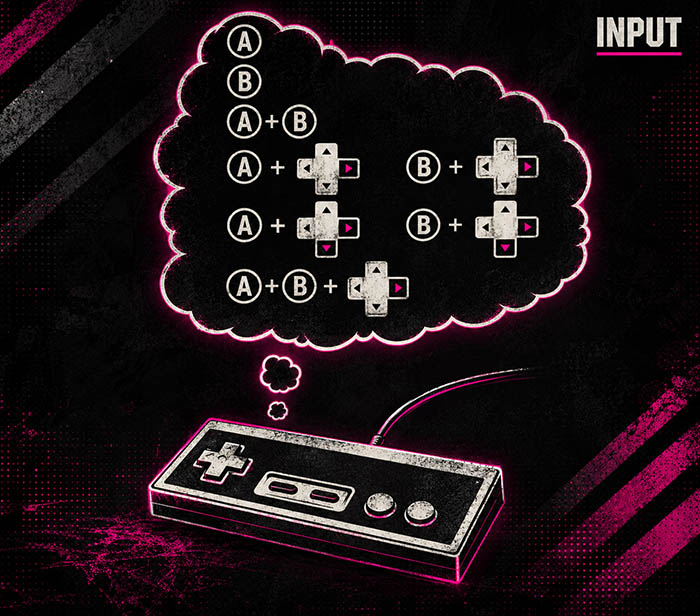
Mario doesn’t simply move upward when you press jump. His acceleration, momentum, jump arc, gravity and air control all contribute to the feeling of movement. Holding the button changes the jump. Moving while airborne changes the trajectory. Running into a jump feels different from jumping from a standstill. The player gradually learns how Mario responds without needing a manual explaining the underlying mechanics.
That is the important part.
You don’t need to know the numbers behind Mario’s movement to understand them. You press the button, watch what happens, adjust your timing and try again. Within minutes, you begin developing an intuitive sense of exactly how far Mario can travel, how much you can correct a jump and when you need to commit to a landing.
That is an enormous amount of design work hiding inside an interaction that looks incredibly simple.
Nintendo could have decided that jumping merely needed to function. Instead, somebody cared about the difference between working and feeling right. They cared about the timing of the movement, the responsiveness of the controls, the relationship between momentum and player input, and all the tiny pieces of feedback that make the action satisfying.
And they did it without needing a hundred buttons.
The Game Was The Product
This is where the comparison with the industry’s current priorities becomes uncomfortable.
Imagine taking the same obsessive attention that went into Mario’s movement and applying it to the question that now dominates too much of modern game development: how do we keep this player engaged?
Now the target isn’t the jump. It’s the retention curve.
The goal becomes getting the player to return tomorrow, complete another objective, progress another level, check another store, claim another reward or spend another ten bucks. The game becomes surrounded by systems designed to influence behavior, and eventually those systems can become more important than the experience they were supposed to support.
The problem begins when the business objective starts dictating the experience instead of the experience creating the value.
And sometimes the industry goes further, borrowing directly from gambling: variable rewards, limited-time offers, near-misses and randomized outcomes. Combined with mechanics designed to keep players engaged, these systems can deliberately push toward addictive behavior.
Somewhere Along The Way, The Player Became The Resource
Look at the vocabulary surrounding modern games. Engagement. Retention. Conversion. Lifetime value. Daily active users. Monthly active users. Monetization.
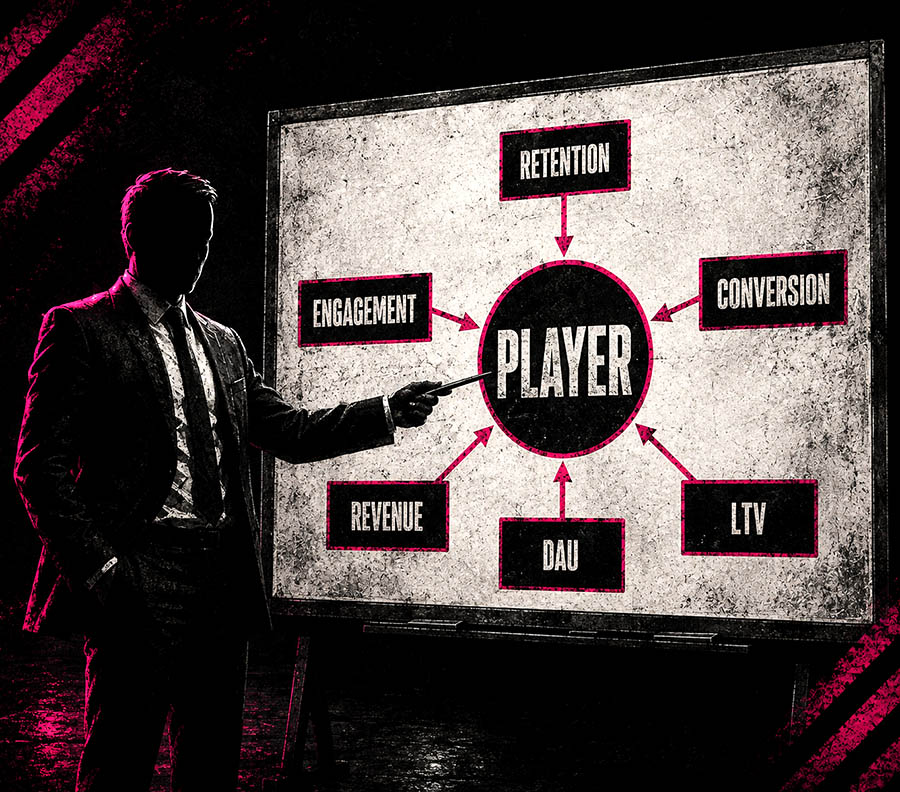
The more the industry optimizes around these numbers, the easier it becomes to confuse a player’s measurable activity with the quality of the game itself.
A player can spend fifty hours in a game because it is magnificent.
A player can also spend fifty hours in a game because the progression has been deliberately stretched, the rewards are carefully timed and missing a week means losing progress or an exclusive item.
That is the problem with treating the player primarily as a metric. The industry can become extremely sophisticated at measuring what people do while losing sight of why they want to do it in the first place.
Mario didn’t become timeless because Nintendo discovered the optimal number of daily logins.
This Is What We Are Losing
The most frustrating part is that the industry already knows the difference.
Every serious developer understands that controls matter. They understand that animation timing matters. They understand that sound feedback matters. They understand that an enemy reacting properly to an attack can make a combat system feel dramatically better. They understand that a tiny improvement to movement can completely change how a game feels.
These things are not academic details.
A developer can spend weeks refining something the average player will never consciously identify. The player won’t know that a particular animation was shortened by a few frames or that an acceleration curve was adjusted repeatedly. They simply know that the character feels responsive.
That invisible work is some of the most valuable work in game development because the player experiences its result directly.
Someone cared enough to make the game feel better.
That is the mentality worth defending.
Because when that mentality gets replaced by endless systems designed primarily around engagement and monetization, the player can end up spending more time inside a game without actually getting more from it.
We Don’t Need More Ways To Keep Players Busy
The industry’s answer to declining engagement is increasingly to add another layer between the player and the game. Another system. Another incentive. Another reason to come back tomorrow.
The answer isn’t to make the player busier. It’s to make the game better.
That is what the Mario example actually matters for. The obsession wasn’t with finding another reason to make the player press the button. It was with making the button worth pressing.
And that distinction is everything.
A game doesn’t need to constantly demand something from the player to earn their time. It needs to respect it. Give us mechanics worth mastering, worlds worth exploring and moments we actually want to experience again.
Make The Game Worth Their Money
Games are businesses. Good.
Then make something worth buying.
Make something players desperately want to play. Make them talk about it. Make them recommend it. Make them remember it years later. Give them an experience that earns their money rather than a system engineered to extract it.
The business should grow because the game delivers, not because the game was built around extracting more from the player.
If a game is so good that players willingly spend another hundred hours with it, that’s a victory.
If players spend another hundred hours because the game has constructed a maze of rewards, timers, currencies and artificial obligations designed to make leaving feel like losing something, that’s an admission of defeat.
The industry needs to stop congratulating itself simply because it managed to keep somebody logged in.
Put The Game First Again
This is what we’re fighting for.
Because gaming became special when developers obsessed over what they could give the player, not what they could extract from them.
Mario’s jump is a tiny example of that philosophy. Celeste is a modern one. Neither needed to manipulate the player into caring. They made the act of playing worth coming back to.
And that’s the standard we want back.
They built worlds. They built mechanics. They built experiences. They took a tiny set of buttons and squeezed every ounce of possibility out of them.
They didn’t ask how much money they could extract from a jump.
And if the people running this industry have forgotten why players fell in love with gaming in the first place, we’re going to remind them.
TO THE PLAYERS.
About the Author